Table Of Contents
- What Are Beta-Glucans and Why Do They Matter?
- The Structural Differences That Determine Immune Potency
- Oat Beta-Glucans: Heart Health Champions
- Mushroom Beta-Glucans: Immune System Powerhouses
- How Each Type Activates Your Immune Response
- Research-Backed Potency Comparison
- Choosing the Right Beta-Glucan Source for Your Goals
- Taking a Complementary Approach to Immune Wellness
When it comes to immune-supporting nutrients, beta-glucans have earned significant attention from both researchers and health-conscious individuals. But here's where it gets interesting: not all beta-glucans are created equal. The beta-glucans found in oats function very differently from those extracted from medicinal mushrooms, despite sharing the same basic name.
If you've been standing in the supplement aisle wondering whether to choose an oat-based or mushroom-based beta-glucan product, you're asking exactly the right question. The source of your beta-glucans fundamentally determines what health benefits you can expect. Understanding these differences isn't just academic knowledge—it's practical information that can help you make smarter decisions about supporting your immune system and overall wellness.
In this comprehensive guide, we'll explore the molecular structures that make oat and mushroom beta-glucans behave so differently in your body, examine the research behind their immune-modulating effects, and help you determine which source aligns best with your specific health goals. Whether you're focused on cardiovascular health, immune resilience, or both, you'll walk away with clarity about these powerful plant compounds.
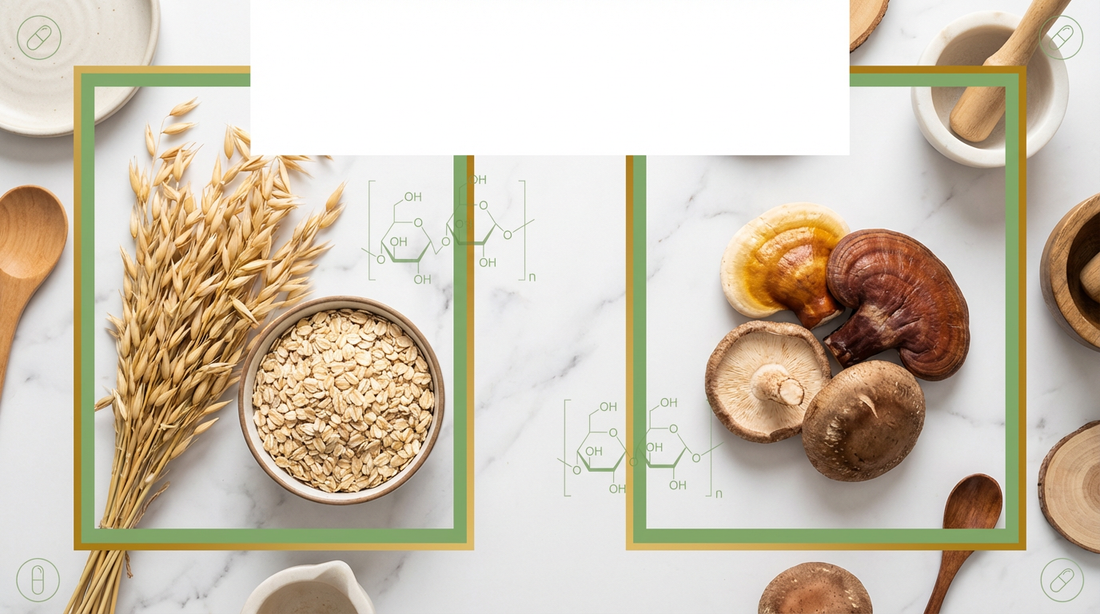
Beta-Glucans Compared
Oats vs Mushrooms: Which Wins for Immune Support?
The Winner for Immune Power
Key Differences at a Glance
How Mushroom Beta-Glucans Activate Immunity
Which Should You Choose?
- Lowering cholesterol levels
- Heart health support
- Blood sugar management
- Digestive wellness
- Immune system activation
- Enhanced immune resilience
- Seasonal immune support
- Overall vitality boost
The Bottom Line
For immune support, mushroom beta-glucans deliver superior potency through their highly branched structure that binds powerfully to immune receptors.
For heart health, oat beta-glucans remain the evidence-backed champion with FDA-approved cholesterol-lowering benefits.
💡 Pro Tip: Many people benefit from both—eat oats for heart health while supplementing with mushroom beta-glucans for immune optimization.
What Are Beta-Glucans and Why Do They Matter?
Beta-glucans are naturally occurring polysaccharides—complex carbohydrates made up of glucose molecules linked together in specific patterns. Think of them as long chains of sugar molecules, but unlike simple sugars that spike your blood glucose, these compounds resist digestion and interact with your immune system in fascinating ways.
Your body recognizes beta-glucans as beneficial foreign substances, triggering a cascade of immune responses without causing inflammation or harm. This unique characteristic makes them what scientists call "biological response modifiers"—natural compounds that can help regulate and optimize immune function. They're found throughout nature in various forms, from the cell walls of baker's yeast to the bran layer of whole grains and the fruiting bodies of medicinal mushrooms.
What makes beta-glucans particularly valuable for health-conscious individuals is their dual role in wellness. Beyond immune support, certain types offer cardiovascular benefits, digestive health support, and even potential metabolic advantages. However, these benefits vary dramatically depending on the source, which is why understanding the differences between oat and mushroom varieties becomes essential for making informed supplement choices.
The Structural Differences That Determine Immune Potency
The molecular architecture of beta-glucans determines everything about how they function in your body. While both oat and mushroom beta-glucans are polymers of glucose, the way these glucose molecules connect creates entirely different biological effects.
Oat beta-glucans feature primarily β-(1,3) and β-(1,4) glycosidic linkages in a mixed pattern. This creates a more linear, less branched structure that remains largely intact as it travels through your digestive system. The molecular arrangement gives oat beta-glucans their characteristic viscosity—that thick, gel-like quality you notice when cooking oatmeal. This soluble fiber property is precisely what makes them so effective for cardiovascular health and blood sugar management.
Mushroom beta-glucans, on the other hand, feature predominantly β-(1,3) linkages in the main chain with β-(1,6) branching side chains. This highly branched, three-dimensional structure is what your immune cells recognize and respond to most vigorously. The specific branching pattern found in medicinal mushrooms like reishi, shiitake, and maitake creates the strongest immune-modulating effects observed in beta-glucan research.
These structural differences aren't minor technical details—they're the fundamental reason why oat beta-glucans excel at supporting heart health while mushroom beta-glucans demonstrate superior immune-activating potential. Your immune cells have specific receptor sites (particularly the Dectin-1 and CR3 receptors) that bind most effectively to the branched β-(1,3)/(1,6) structure found in mushroom sources.
Oat Beta-Glucans: Heart Health Champions
Oat beta-glucans have earned FDA-approved health claims for their ability to reduce cholesterol levels and support cardiovascular health. This recognition didn't come lightly—it's based on decades of consistent research demonstrating their effectiveness when consumed regularly as part of a healthy diet.
When you consume oat beta-glucans, they form a viscous gel in your digestive tract. This gel-like substance binds to cholesterol-containing bile acids, preventing their reabsorption and forcing your liver to pull cholesterol from your bloodstream to produce new bile acids. The result? Lower LDL cholesterol levels over time. Studies show that consuming just 3 grams of oat beta-glucans daily can reduce total cholesterol by 5-10% and LDL cholesterol by similar amounts.
Additional Benefits of Oat Beta-Glucans
Beyond cholesterol management, oat beta-glucans offer several other wellness advantages:
- Blood sugar regulation: The viscous fiber slows glucose absorption, helping to moderate post-meal blood sugar spikes
- Digestive health: Acts as a prebiotic, feeding beneficial gut bacteria and supporting overall digestive function
- Satiety support: The gel-forming property promotes feelings of fullness, which can support healthy weight management
- Gentle immune modulation: While less potent than mushroom varieties, oat beta-glucans do provide modest immune support
For individuals primarily concerned with cardiovascular wellness, metabolic health, or digestive support, oat beta-glucans represent an excellent choice. They're particularly well-suited for daily, long-term use as part of a heart-healthy lifestyle. However, if your primary goal is robust immune system activation, mushroom sources offer distinct advantages.
Mushroom Beta-Glucans: Immune System Powerhouses
When researchers examine beta-glucans specifically for immune-enhancing properties, mushroom-derived varieties consistently demonstrate the most impressive results. The highly branched β-(1,3)/(1,6) structure found in medicinal mushrooms interacts powerfully with multiple components of your immune system, creating what scientists describe as immunomodulation—the ability to both activate and balance immune responses.
Different mushroom species offer variations in their beta-glucan content and structure. Reishi mushrooms contain beta-glucans known for supporting balanced immune responses and overall vitality. Shiitake mushrooms feature lentinan, a specific beta-glucan that has been extensively studied for immune activation. Maitake mushrooms provide grifolan, another potent beta-glucan variant. While each offers unique benefits, they all share that critical branched structure that makes them immune-system champions.
How Mushroom Beta-Glucans Support Immune Function
The immune-supporting mechanisms of mushroom beta-glucans are both diverse and well-documented:
- Macrophage activation: These beta-glucans bind to receptors on macrophages (your immune system's first responders), enhancing their ability to identify and respond to potential threats
- Natural killer cell enhancement: NK cells become more active and efficient at identifying abnormal cells when exposed to mushroom beta-glucans
- Cytokine modulation: These compounds help regulate the production of signaling molecules that coordinate immune responses
- Complement system support: Mushroom beta-glucans can enhance this critical part of your innate immune system
What makes mushroom beta-glucans particularly valuable is their immunomodulating rather than simply immune-stimulating effect. They don't just amp up immune activity indiscriminately—they help balance and optimize immune function, which is crucial for long-term wellness. This makes them suitable for regular use without concern about overstimulating immune responses.
The potency of mushroom beta-glucans varies based on extraction methods and mushroom species. High-quality supplements use hot water extraction or advanced techniques to concentrate these compounds, with some products standardizing to specific beta-glucan percentages to ensure consistent immune support.
How Each Type Activates Your Immune Response
Understanding how these different beta-glucan sources interact with your immune system reveals why mushroom varieties demonstrate superior immune potency. Your immune cells are equipped with pattern recognition receptors designed to identify molecules commonly found on pathogens. Beta-glucans trigger these receptors, but not all beta-glucans trigger them equally.
The Dectin-1 receptor, found on macrophages, dendritic cells, and neutrophils, binds most strongly to β-(1,3) glucans with β-(1,6) branching—precisely the structure abundant in mushroom sources. When mushroom beta-glucans bind to Dectin-1, they initiate a signaling cascade that activates these immune cells, enhancing their surveillance and response capabilities. This doesn't create an inflammatory response; rather, it primes your immune system to function more effectively.
Oat beta-glucans, with their mixed β-(1,3)/(1,4) linkage pattern and minimal branching, interact less vigorously with Dectin-1 receptors. They still provide immune benefits, particularly through their effects on gut health (since approximately 70% of your immune system resides in your digestive tract), but the direct immune cell activation is considerably less pronounced than what mushroom varieties produce.
The Role of Molecular Weight
Beyond structure, the size of beta-glucan molecules also influences their immune effects. Larger, high-molecular-weight beta-glucans typically demonstrate stronger immune-modulating properties. Mushroom beta-glucans often maintain higher molecular weights, particularly when extracted using gentle methods that preserve their natural structure. This size advantage, combined with their branched architecture, creates a one-two punch for immune support.
Some processing methods can break down beta-glucans into smaller fragments, reducing their effectiveness. This is why the quality and extraction method of beta-glucan supplements matters tremendously—not just the source. When evaluating supplements, look for products that specify their extraction method and ideally provide information about molecular weight or degree of branching.
Research-Backed Potency Comparison
Scientific literature consistently demonstrates the distinct specializations of oat versus mushroom beta-glucans. A comprehensive review of beta-glucan research reveals that when studies focus on immune parameters—such as NK cell activity, macrophage function, or resistance to immune challenges—mushroom-derived beta-glucans show more pronounced effects at lower doses.
For cardiovascular outcomes, the research overwhelmingly favors oat beta-glucans. Multiple clinical trials have established that 3 grams daily of oat beta-glucans can significantly reduce LDL cholesterol. The FDA's approval of health claims for oat beta-glucans and heart health reflects this strong evidence base. No comparable cardiovascular claims exist for mushroom beta-glucans because their mechanism of action simply doesn't target cholesterol absorption in the same way.
When examining immune function specifically, studies on mushroom beta-glucans demonstrate several noteworthy findings. Research on beta-glucans from shiitake mushrooms has shown enhanced immune cell activity in both animal and human studies. Trials examining beta-glucans from maitake mushrooms have documented improved immune markers and general wellness outcomes. Reishi mushroom beta-glucans have been studied for their ability to support balanced immune responses over time.
Dosage Considerations
The effective dosage differs significantly between sources:
- Oat beta-glucans for heart health: 3 grams daily is the established effective dose for cholesterol reduction
- Mushroom beta-glucans for immune support: Effective doses typically range from 500 mg to 1,000 mg daily, depending on concentration and extraction method
The lower effective dose for mushroom beta-glucans reflects their greater immune-specific potency. You need less of these highly bioactive compounds to achieve meaningful immune support compared to the higher amounts of oat beta-glucans needed for cardiovascular benefits.
Choosing the Right Beta-Glucan Source for Your Goals
Your health priorities should guide your beta-glucan selection. Rather than viewing one source as universally superior, recognize that each excels in different areas of wellness support.
Choose oat beta-glucans if your primary goals include:
- Lowering cholesterol levels and supporting cardiovascular health
- Managing blood sugar responses and metabolic wellness
- Increasing dietary fiber intake for digestive health
- Supporting healthy weight management through enhanced satiety
Choose mushroom beta-glucans if your primary goals include:
- Optimizing immune system function and resilience
- Supporting your body's natural defenses during seasonal challenges
- Enhancing overall vitality and wellness through immune modulation
- Complementing other immune-supporting nutrients and lifestyle practices
For many health-conscious individuals, there's no need to choose exclusively. Consuming oats or oat-based foods as part of your regular diet provides cardiovascular and metabolic benefits, while supplementing with concentrated mushroom beta-glucans targets immune optimization. This complementary approach addresses multiple aspects of wellness simultaneously.
Quality Markers to Look For
Regardless of which source you choose, quality matters enormously. When selecting beta-glucan supplements, consider these factors:
- Source transparency: Reputable products clearly identify the specific mushroom species or oat variety used
- Extraction method: Hot water extraction is considered the gold standard for mushroom beta-glucans
- Beta-glucan content: Look for products that specify the actual beta-glucan percentage, not just total polysaccharides
- Third-party testing: Quality manufacturers provide verification of purity and potency
- Fruiting body vs. mycelium: For mushroom products, fruiting body extracts typically contain higher beta-glucan concentrations than mycelium-based products
Taking a Complementary Approach to Immune Wellness
While mushroom beta-glucans offer impressive immune-supporting potential, they work even more effectively as part of a comprehensive wellness strategy. Your immune system is remarkably complex, responding to numerous factors including nutrition, sleep quality, stress levels, and overall lifestyle habits.
Combining mushroom beta-glucans with other immune-supporting nutrients creates synergistic benefits. Vitamin C, for instance, supports multiple aspects of immune function, from supporting barrier defenses to enhancing immune cell activity. Garlic extract provides compounds like allicin that have been traditionally valued for immune wellness. Propolis, a resinous compound collected by bees, contains flavonoids and other bioactive compounds that complement beta-glucan's immune-modulating effects.
At QN Wellness, we've carefully formulated our Immune Care™ supplement to bring together these complementary immune-supporting ingredients. By combining Vitamin C, Garlic Extract, and Propolis in a plant-based formula, we've created a comprehensive approach to immune wellness that aligns with our commitment to vegetarian, science-backed health solutions.
Beyond supplementation, remember that foundational wellness practices remain essential. Adequate sleep, stress management, regular physical activity, and a nutrient-dense diet rich in colorful vegetables and fruits all contribute to optimal immune function. Beta-glucans—whether from mushrooms or oats—work best when they're part of this larger wellness picture rather than expected to compensate for lifestyle factors that undermine immune health.
For those pursuing comprehensive wellness that addresses multiple body systems, consider how different supplements can work together synergistically. Just as Immune Care™ combined with Omega-Tree™ creates a foundation for both immune resilience and cardiovascular wellness, pairing immune-supporting nutrients with targeted formulas for other health concerns creates a truly holistic approach to vitality.
The question of whether oat or mushroom beta-glucans offer superior immune potency has a clear answer: mushroom-derived beta-glucans demonstrate significantly stronger immune-modulating effects due to their highly branched molecular structure that interacts powerfully with immune cell receptors. Their β-(1,3)/(1,6) configuration binds effectively to Dectin-1 and other pattern recognition receptors, activating macrophages, natural killer cells, and other critical components of your immune defense system.
However, this doesn't diminish the value of oat beta-glucans—it simply clarifies their different specialty. Oat beta-glucans excel at supporting cardiovascular health, managing cholesterol levels, and promoting metabolic wellness through their unique viscous fiber properties. For heart health and blood sugar management, they remain the evidence-backed choice.
Your wellness journey benefits most when you match the right tools to your specific goals. If immune resilience and optimization are your priorities, mushroom beta-glucans offer research-backed potency at relatively modest doses. If cardiovascular health concerns top your list, oat beta-glucans provide proven benefits. And for many health-conscious individuals, incorporating both—through whole food sources and targeted supplementation—creates the most comprehensive approach to wellness.
Understanding these differences empowers you to make informed decisions about your health, moving beyond marketing claims to choose supplements based on solid science and your personal wellness objectives. Whether you're exploring immune support, heart health, or overall vitality, knowing how different beta-glucan sources function in your body helps you build a supplement regimen that truly serves your unique needs.
Support Your Wellness Journey with Plant-Based Solutions
Discover QN Wellness's complete range of vegetarian supplements designed to support your immune health, vitality, and overall wellness. From targeted immune support to comprehensive health solutions, we're committed to helping you feel your best naturally.
Explore QN Wellness Products